By Souvik Sarkar
For decades, traditional CGI pipelines relied on offline rendering—a time-consuming process where each frame is computed with high precision, often taking hours or even days. While this method produces highly detailed visuals, it significantly slows down production timelines.
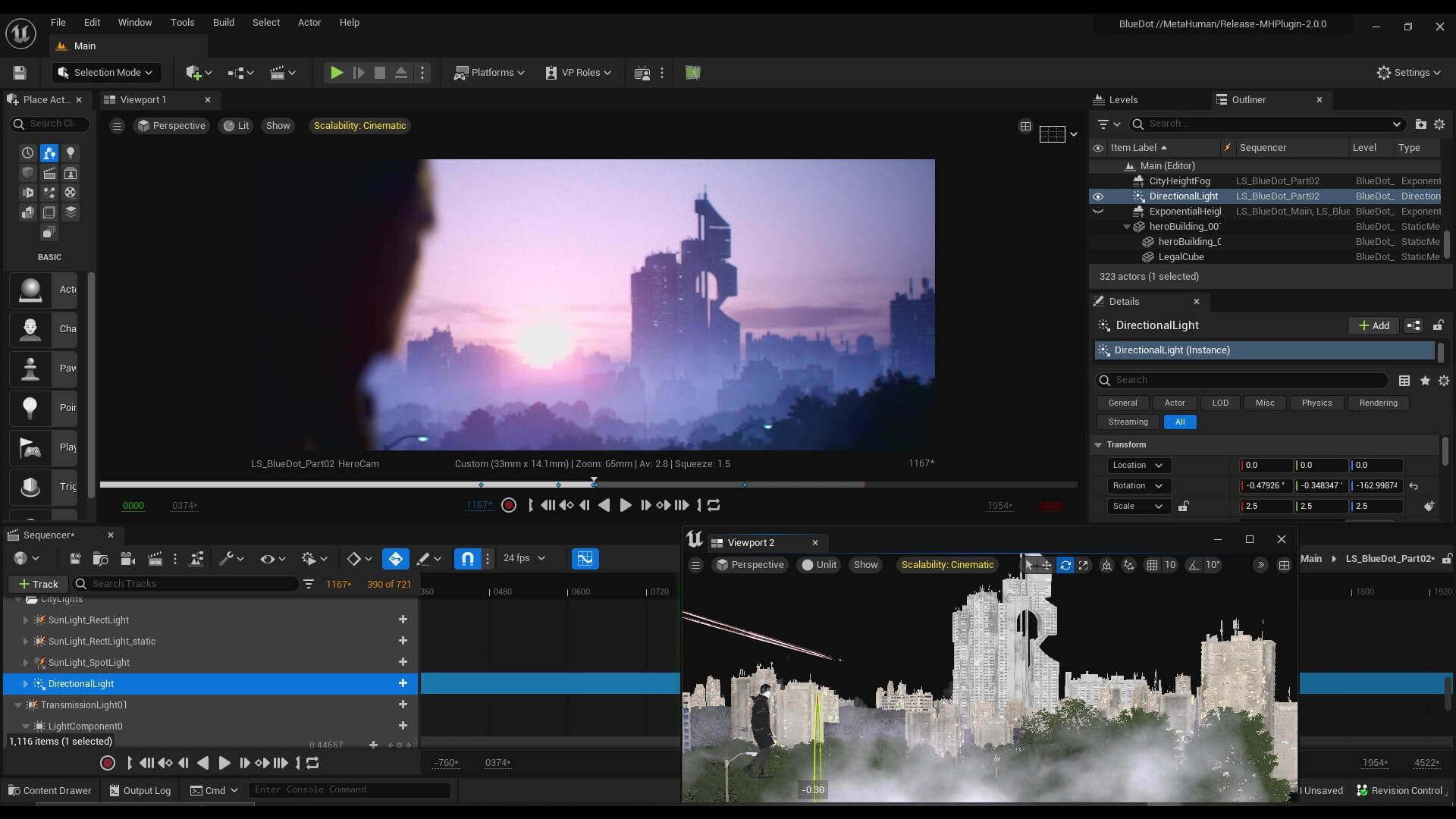
Real-time rendering is changing this paradigm by delivering near-final quality visuals instantly. Powered by advanced GPUs and game engines, real-time rendering allows artists to see lighting, textures, and animations immediately as they work. This dramatically accelerates the creative process and allows for rapid experimentation.
One of the key reasons real-time rendering is gaining dominance is efficiency. Instead of waiting for renders to complete, artists can iterate quickly, make adjustments on the fly, and finalize scenes faster. This is especially valuable in industries like gaming, film, architecture, and virtual production.
Another major benefit is interactivity. Real-time engines enable immersive experiences such as virtual reality (VR) and augmented reality (AR), where environments must respond instantly to user input. This was not feasible with traditional rendering pipelines.
However, this shift does not completely eliminate traditional CGI. High-end productions still rely on offline rendering for extreme realism and complex simulations. Instead, the future lies in hybrid workflows—where real-time rendering handles speed and iteration, while traditional CGI ensures final polish when needed.
In conclusion, real-time rendering is not just replacing older methods—it is redefining the entire production pipeline. By combining speed, flexibility, and creative freedom, it empowers artists to push boundaries and bring ideas to life faster than ever before.